











Heavy-Duty Truck Transmissions: ZF TraXon, Volvo I-Shift, Scania Opticruise & More
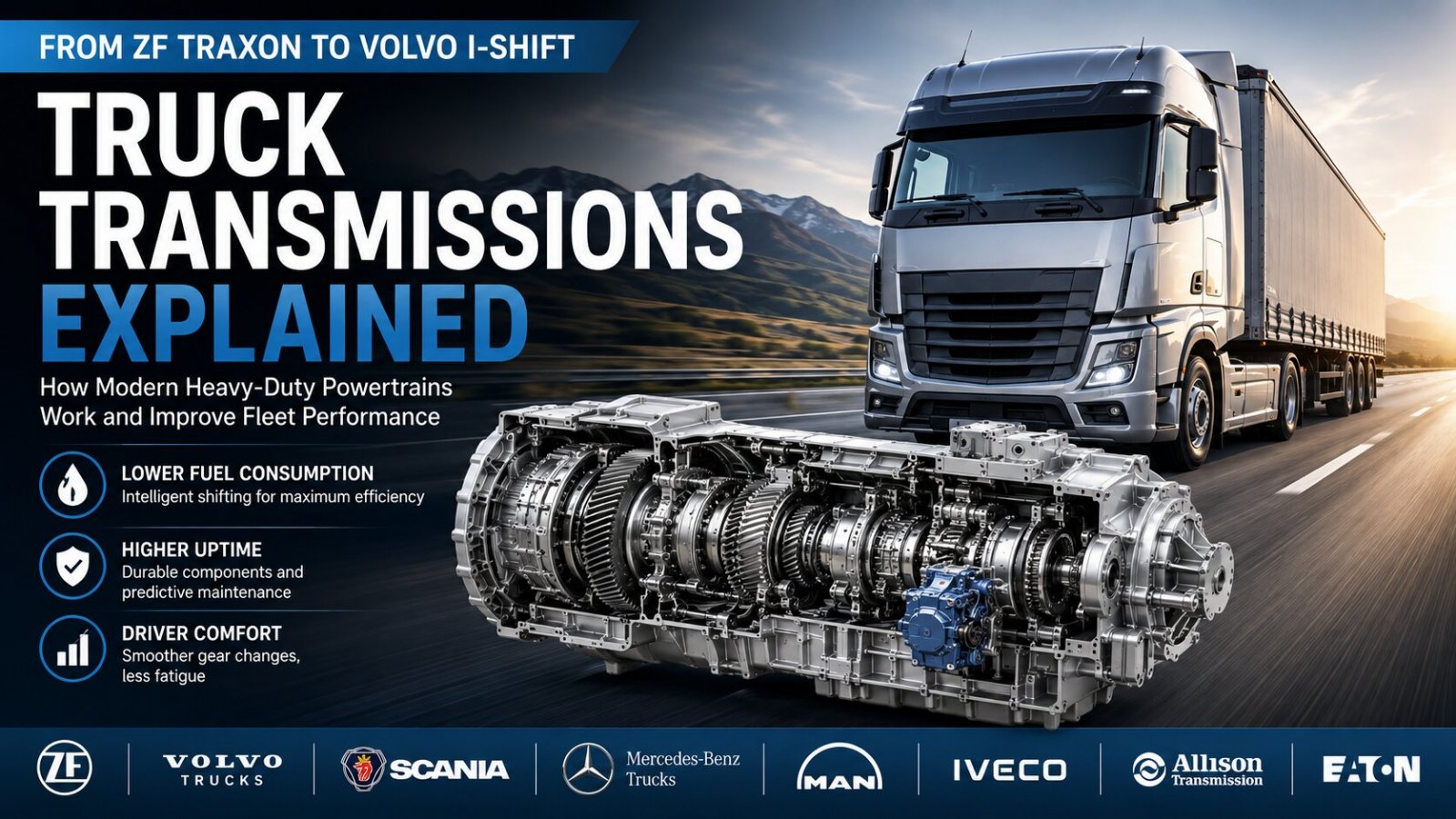
Modern truck transmissions are no longer just gearboxes. From ZF TraXon and Volvo I-Shift to Scania Opticruise and Mercedes PowerShift, intelligent automated manual transmissions are redefining fuel efficiency, fleet productivity and driver comfort. Here's how today's heavy-duty transmission technologies are shaping the future of commercial transport.
- | Kamyonum
KAMYONUM GLOBAL | RESEARCH
The heavy-duty truck industry has changed dramatically over the past two decades.
While engine performance remains a critical factor, today's commercial vehicles rely just as much on intelligent transmission systems to deliver fuel efficiency, lower emissions and higher uptime.
Modern Automated Manual Transmissions (AMTs) are no longer simple gear-changing mechanisms. They continuously communicate with the engine, braking system, predictive cruise control, GPS data and onboard electronic control units to determine the most efficient gear for every driving situation.
As transport operators face increasing pressure to reduce operating costs and comply with stricter environmental regulations, transmission technology has become one of the most important competitive advantages for truck manufacturers.
This Kamyonum Research report explores how leading systems such as ZF TraXon, Volvo I-Shift, Scania Opticruise, Mercedes PowerShift and other advanced heavy-duty transmissions are transforming modern road transport.
Why Truck Transmissions Matter More Than Ever
A modern heavy-duty transmission does far more than transfer engine torque to the wheels.
Today's intelligent powertrain systems are designed to:
- Reduce fuel consumption
- Improve vehicle uptime
- Optimize engine performance
- Lower CO? emissions
- Reduce driver fatigue
- Minimize component wear
- Support predictive maintenance strategies
Even a one-percent improvement in fuel efficiency can represent significant annual savings for large fleets operating hundreds of trucks.
For this reason, manufacturers now invest heavily in transmission software, predictive shifting algorithms and digital vehicle integration alongside engine development.
The Rise of Automated Manual Transmissions (AMTs)
Unlike traditional automatic transmissions with torque converters, most European heavy-duty trucks rely on Automated Manual Transmissions (AMTs).
AMTs combine the mechanical efficiency of a manual gearbox with electronically controlled clutch and gear selection.
This architecture offers several advantages:
- Lower weight
- Higher mechanical efficiency
- Reduced fuel consumption
- Improved durability
- Better torque handling
- Lower total cost of ownership (TCO)
These characteristics have made AMTs the preferred solution for long-haul commercial transport across Europe.
ZF TraXon: Setting the Industry Benchmark
Introduced in 2014, ZF's TraXon platform quickly became one of the world's leading heavy-duty automated manual transmissions.
More than 1.5 million TraXon transmissions have been produced worldwide, demonstrating its widespread adoption across commercial vehicle manufacturers.
The latest TraXon 2 platform introduces:
- Faster electronic architecture
- Predictive shifting strategies
- Cybersecurity improvements
- Over-the-air software update capability
- Improved fuel efficiency
- Hybrid-ready modular design
ZF also integrates technologies such as PreVision GPS predictive shifting, allowing the transmission to anticipate road gradients before the truck reaches them.
Volvo I-Shift: Software Meets Efficiency
Volvo Trucks introduced the I-Shift with one clear objective:
Keep the engine operating within its most efficient RPM range at all times.
Using advanced software, I-Shift continuously evaluates:
- Vehicle weight
- Road gradient
- Driver input
- Cruise control settings
- Engine torque demand
to determine the optimal gear.
The result is smoother driving, improved fuel economy and reduced driver workload.
Volvo has continued to expand the I-Shift family with specialized software packages, crawler gears and dual-clutch variants designed for different transport applications.
More Than a Gearbox
Perhaps the biggest misconception about modern truck transmissions is that they simply change gears.
In reality, today's transmission has become one of the vehicle's central digital control systems.
Modern AMTs interact with:
- Engine Control Units (ECUs)
- Adaptive Cruise Control
- Predictive Cruise Control
- Electronic Braking Systems
- Retarders
- Fleet Management Platforms
- Remote Diagnostics
- Over-the-Air Updates
This high level of integration is one reason why manufacturers increasingly describe the powertrain as a connected digital ecosystem rather than a collection of mechanical components.
Kamyonum Research Insight
Transmission technology has evolved from a purely mechanical engineering discipline into one driven by software, electronics and artificial intelligence.
Future heavy-duty powertrains will likely integrate even more predictive capabilities, hybrid systems and cloud-based optimization.
As trucking moves toward digitalization, automated driving and alternative powertrains, intelligent transmission systems will remain one of the industry's key technologies.
Sources
- ZF Commercial Vehicle Solutions
- Volvo Trucks – I-Shift Technical Information
- Daimler Truck Technical Documentation
- Scania Technical Papers
- ACEA (European Automobile Manufacturers' Association)
- International Road Transport Union (IRU)
- European Commission – Road Transport & CO? Regulations
YORUMLAR
Yorum Yap