










Maxion Wheels Develops Low-Carbon Truck Wheel Reducing CO Emissions by More Than 50%
Maxion Wheels has unveiled a next-generation low-carbon steel truck wheel for Daimler Truck's reECONIC project, reducing cradle-to-gate CO? emissions by more than 50%.
- | Kamyonum
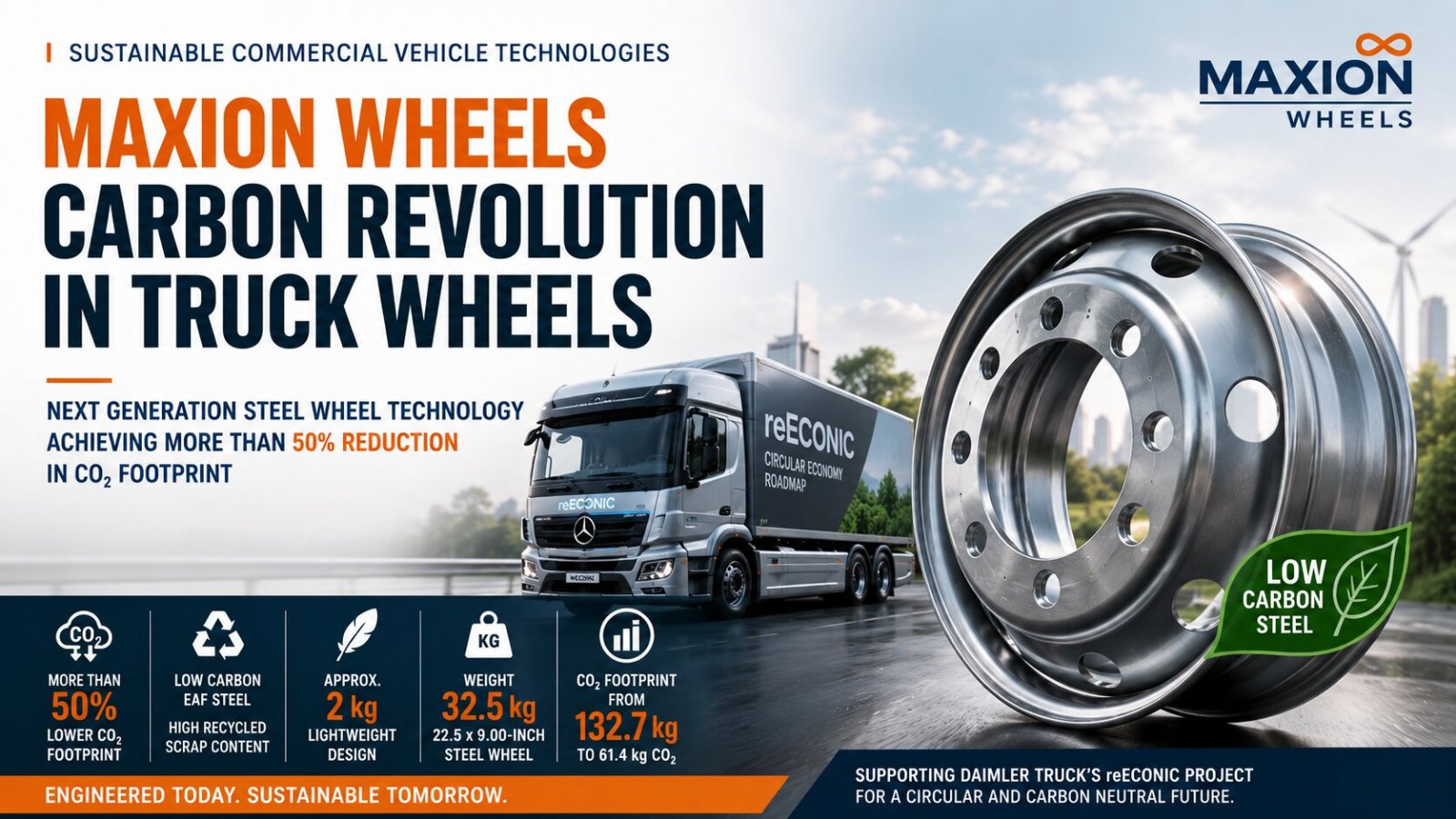
Maxion Wheels Unveils Low-Carbon Steel Truck Wheel Cutting CO? Footprint by More Than 50%
Developed for Daimler Truck's reECONIC project, Maxion Wheels' next-generation steel truck wheel demonstrates how component innovation can play a major role in decarbonizing the commercial vehicle industry.
As commercial vehicle manufacturers accelerate their transition toward climate-neutral transportation, sustainability is no longer driven solely by electric drivetrains. Critical vehicle components are increasingly becoming part of the industry's decarbonization strategy.
Maxion Wheels has introduced a new-generation low-carbon steel truck wheel developed for Daimler Truck's reECONIC circular economy demonstrator, achieving a more than 50 percent reduction in cradle-to-gate CO? emissions compared with a conventional steel wheel.
The project demonstrates how innovative materials, lightweight engineering and circular manufacturing can significantly reduce the environmental footprint of heavy-duty vehicle components without compromising performance or safety.
Low-Carbon Steel Combined with Lightweight Engineering
The new 22.5 x 9.00-inch commercial vehicle wheel weighs only 32.5 kg and incorporates several sustainability-focused engineering solutions.
The wheel is manufactured using Electric Arc Furnace (EAF) steel, produced largely from recycled scrap material with substantially lower embedded carbon than conventional blast-furnace steel.
Maxion Wheels also optimized the wheel design through advanced lightweight engineering, reducing weight by approximately 2 kilograms while maintaining structural integrity and durability.
As a result, the wheel's cradle-to-gate carbon footprint has been reduced from 132.7 kg CO? to 61.4 kg CO?, representing one of the most significant reductions achieved in a commercial vehicle steel wheel.
Material Innovation Drives Carbon Reduction
According to Maxion Wheels, approximately 75–85 percent of a steel truck wheel's carbon footprint originates from raw material production.
By focusing on low-carbon steel sourcing and recycled content rather than manufacturing efficiency alone, the company has achieved a substantial environmental benefit while preserving product performance.
The project highlights the growing importance of material innovation as commercial vehicle manufacturers pursue ambitious carbon reduction targets.
Supporting Daimler Truck's Circular Economy Vision
The wheel has been developed as part of Daimler Truck's reECONIC demonstrator, a project showcasing circular economy principles for next-generation commercial vehicles.
The demonstrator integrates recycled materials, renewable resources and circular manufacturing concepts aimed at reducing lifecycle emissions across the entire vehicle.
The concept vehicle was presented during IFAT Munich 2026, with field validation planned during the second half of 2026.
Türkiye Strengthens Its Strategic Role
The development is also significant for Türkiye.
Maxion Wheels has recently started serial production of forged aluminum truck wheels at its manufacturing facility in Manisa through its joint venture with İnci Holding, reinforcing the country's position as an important production hub for advanced commercial vehicle components serving European markets.
Kamyonum Analysis
The commercial vehicle industry's decarbonization strategy is rapidly expanding beyond alternative powertrains.
Today, components such as wheels, axles, suspension systems and chassis structures are becoming essential contributors to overall vehicle sustainability.
Maxion Wheels' latest development demonstrates that advanced materials and intelligent engineering can deliver meaningful carbon reductions while remaining fully compatible with large-scale industrial production.
As fleet operators and OEMs increasingly evaluate lifecycle emissions, component-level innovation is expected to become one of the defining competitive factors in the next generation of commercial vehicles.
YORUMLAR
Yorum Yap