










Türkiye on the Radar of Global Heavy-Duty Giants
Chinese Brands Move Closer to Europe as Electric and Hydrogen Trucks Create a New Competitive Landscape
- | Kamyonum
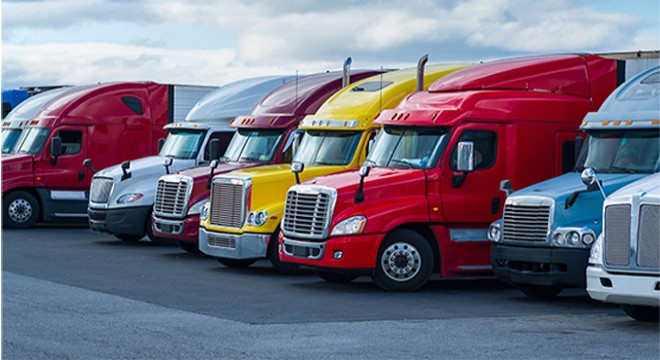
Despite the strong presence of domestic manufacturers and Europe-based brands, Türkiye’s heavy-duty vehicle market is increasingly viewed as a potential target by major global players that are not yet active in the country. The European expansion strategies of Chinese manufacturers, the search for alternative markets by U.S. and Asia-based truck brands, and the rapid transformation driven by electric and hydrogen technologies are positioning Türkiye as a key competitive arena in the medium term.
Chinese Heavy-Duty Giants at Europe’s Gate
China-based heavy-duty manufacturers such as FAW Jiefang, Sinotruk, Dongfeng, Foton, Shacman, and Beiben hold strong positions across Asia, Africa, the Middle East, and Russia. In recent years, their development of EU-compliant Euro 6, electric, and hydrogen-powered models has significantly accelerated their entry into the European market. Industry experts suggest that once Chinese brands gain a foothold in Europe, Türkiye is likely to become their next natural destination.
Türkiye as an Alternative Hub for U.S. and Asian Brands
U.S.-based truck manufacturers such as Peterbilt, Kenworth, Freightliner, Mack, and International Trucks face limitations in Europe due to their long-nose truck designs. However, Türkiye’s role as a logistics hub, its strong export connections, and overall market scale position the country as a potential regional production or assembly base for these brands.
Similarly, Japanese manufacturers Hino, Isuzu (heavy segment), and UD Trucks, along with Indian players Tata Motors and Ashok Leyland, are not yet officially present in Türkiye’s heavy-duty segment. Nevertheless, these brands are reportedly evaluating Türkiye as a strategic gateway for expansion into Europe and the Middle East.
Electric and Hydrogen Trucks Are Reshaping Competition
Globally, investments in electric and hydrogen-powered heavy-duty vehicles are set to fundamentally reshape market dynamics. Brands such as Nikola, Hyzon, BYD, XCMG, Foton, and FAW have made significant progress in the zero-emission truck segment. While some are already running pilot projects in Europe, Türkiye stands out as an open and emerging market for new entrants in this field.
Experts point out that once infrastructure investments and regulatory frameworks in Türkiye become clearer, these global brands—currently absent from the market—could enter through imports, distributorships, joint ventures, or local production models.
Rising Competition, A Deeper Market
According to sector representatives, the potential entry of new global heavy-duty brands into Türkiye would:
-
Intensify competition
-
Reshape the balance between pricing and technology
-
Accelerate electrification and alternative fuel investments
Türkiye’s strong manufacturing base and strategic position along key logistics corridors signal a period of heightened global competition in the heavy-duty vehicle sector.
Why Türkiye Is a Key Target Market
The growing interest of global heavy-duty manufacturers in Türkiye is driven by several strategic factors. Beyond market size, Türkiye stands out for its production capabilities, geographic location, and logistics strength.
First, Türkiye is one of Europe’s leading heavy commercial vehicle production and export centers. Hosting both strong domestic manufacturers and global OEM production facilities, the country offers EU-standard manufacturing infrastructure and a skilled workforce, enabling low adaptation costs for new entrants.
Geographically, Türkiye serves as a natural bridge between Europe, the Middle East, the Caucasus, Central Asia, and North Africa, making it attractive not only as a sales market but also as an export-oriented production, assembly, and logistics hub.
In addition, continued fleet renewal demand, the dynamic structure of the logistics and transportation sector, and expected medium- to long-term infrastructure investments point to sustainable heavy-duty vehicle demand. Public transportation, municipal fleets, and international logistics operations represent particularly strong potential for next-generation vehicles.
From an electrification and hydrogen transition perspective, Türkiye remains a non-saturated market, offering first-mover advantages through pilot projects and strategic partnerships for global brands not yet present.
Taken together, these factors position Türkiye not only as a market for today, but as a future growth platform for global heavy-duty vehicle manufacturers. Industry observers expect Türkiye to feature more prominently in upcoming discussions around imports, distributorships, joint production, and technology investments.
YORUMLAR
Yorum Yap