










Summer Heat Increases Operational Risks in Dangerous Goods Transportation
Rising summer temperatures are becoming a critical risk factor for safety and operational continuity in the transportation of dangerous goods. The movement of hazardous materials such as flammable liquids, compressed gases and temperature-sensitive chemicals requires stricter operational control than ever before, making packaging, vehicle selection, route planning and storage conditions essential components of safe transport.
- | Kamyonum
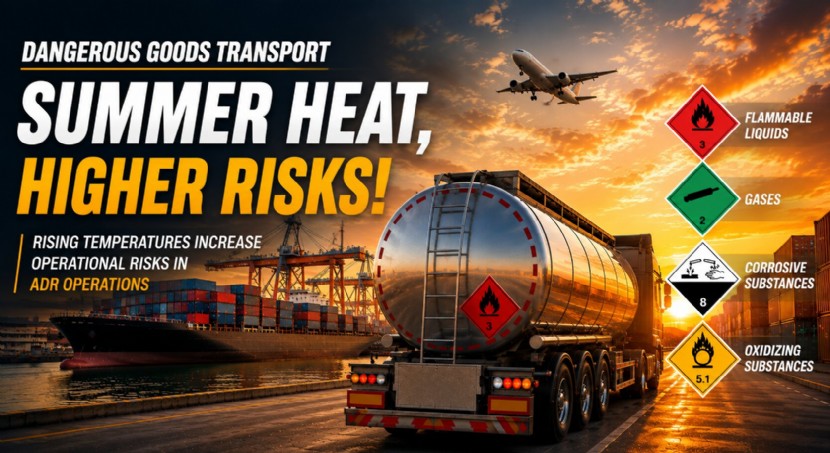
International freight forwarding and integrated logistics provider Lanes Logistics has evaluated the impact of extreme summer temperatures on dangerous goods operations and highlighted the precautions that should be taken throughout the supply chain.
Higher Risks for Temperature-Sensitive Dangerous Goods
As ambient and in-vehicle temperatures increase during the summer months, the risk of pressure build-up, leakage and product degradation also rises, particularly for flammable liquids, aerosols, compressed gases and certain chemicals.
For cargo transported under the ADR (Agreement concerning the International Carriage of Dangerous Goods by Road) framework, inadequate temperature control can lead not only to serious safety risks but also to regulatory compliance issues.
According to Ali Demircan, Operations Director at Lanes Logistics:
"During the summer months, the greatest threat in dangerous goods transportation is that high temperatures can alter the physical and chemical behaviour of hazardous materials. Temperature management must therefore be considered an integral part of safe transportation."
Storage and Vehicle Temperature Control
Maintaining temperature-controlled storage facilities is one of the most effective ways to reduce operational risks during summer. Extended waiting times at ports, customs terminals and logistics hubs can expose hazardous cargo to excessive heat if appropriate precautions are not taken.
The use of climate-controlled vehicles, shaded parking areas and continuous temperature monitoring systems helps preserve product integrity while significantly reducing the likelihood of leakage, fire or explosion. Regular vehicle maintenance and pre-season inspections of cooling systems are equally important.
Packaging and Labelling Remain Critical
Proper UN-certified packaging provides additional protection against pressure increases caused by high temperatures. Equally important are accurate hazard labels and complete documentation, which enable faster and safer emergency response in the event of an incident.
Ali Demircan added:
"Proper packaging and complete labelling serve not only as preventive measures but also facilitate emergency response if an unexpected situation occurs."
Route Planning Becomes Even More Important in Summer
Transport operations carried out during the hottest hours of the day present additional risks for both cargo and vehicle safety. Planning departures during cooler periods, minimizing waiting times and identifying suitable rest locations should become standard operational practice throughout the summer season.
Companies are also encouraged to consider possible delays at ports and border crossings by developing alternative routes and contingency schedules, reducing the amount of time hazardous cargo remains exposed to extreme temperatures.
As climate conditions become increasingly challenging, proactive risk management, strict ADR compliance and effective operational planning remain the cornerstones of safe and sustainable dangerous goods transportation.
YORUMLAR
Yorum Yap